


5S’s of Parenting – Ways to Provoke Your Children
The 5 “Don’ts” of Parenting — Sometimes, without realizing, we provoke our children’s hearts through our tone, attitude, or silence.
Mocking, ignoring, or withdrawing doesn’t teach discipline — it builds distance.
Let’s pause, reflect, and choose compassion over criticism.
These 5 common reactions — Smirk, Snub, Shut, Shame, and Sever — may seem small, but they deeply impact a child’s confidence and emotional safety. Awareness is the first step toward change.
5 «S» في التربية – طرق قد تستفزّ بها أطفالك
الممنوعات الخمس في التربية — أحيانًا، من دون أن نشعر، نستفزّ مشاعر أطفالنا من خلال نبرة صوتنا، أو أسلوبنا، أو حتى صمتنا.
💔 السخرية، أو التجاهل، أو الانسحاب لا تُعلِّم الانضباط — بل تزرع المسافة.
فلنتوقّف قليلًا، ونتأمّل، ونختر الرحمة بدلًا من النقد.
هذه السلوكيات الخمس الشائعة — الابتسامة الساخرة، التجاهل، الانغلاق، الإخجال، والقطيعة — قد تبدو بسيطة، لكنها تؤثّر بعمق في ثقة الطفل بنفسه وأمانه العاطفي. إنّ الوعي هو الخطوة الأولى نحو التغيير.
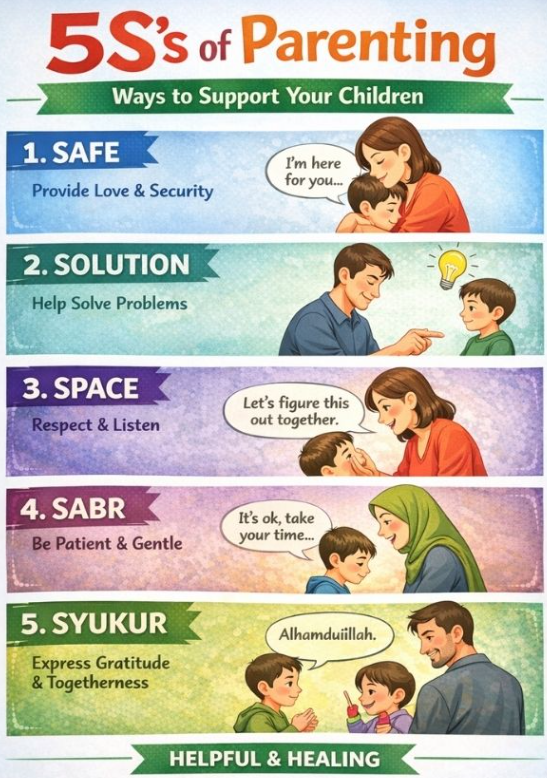
5S’s of Parenting – Ways to Support Your Children
Parenting with Mercy & Mindfulness
Every child deserves to feel Safe, Supported, and Seen.
These 5S’s — Safe, Solution, Space, Sabr, Syukur — help you nurture your child’s emotional, spiritual, and mental wellbeing the Islamic way.
Children thrive when parents guide with patience, gratitude, and presence.
This model encourages a balanced approach — nurturing love while setting respectful boundaries.
5 »S »في التربية – طرق لدعم أطفالك
التربية برحمٍة ووعي
ّيا ومقَّد ًرا.
ك ّل طف ٍل يستح ّق أن يشعر باألمان، والدعم، وأن يكون مرئً
تساعدك ھذه «الخمسة S «خ سS ة«ان، لأمان،ل، لحلول،حة، مساحة،، الصبر، و لشك رعاعل ارعاية الرفاهي لعاطفيي الروحيي
الذهن ولط الموفق املنجهمي.
ينمو األطفال ويزدهرون عندما يو ّجههم الوالدان بالصبر واالمتنان والحضور الواعي.
یش ّجع ھذا النموذج على
ٍ
نھج متوازن — یجمع بین الرعایة بالمحّبة ووضع حدوٍد قائمة على الاحترام.
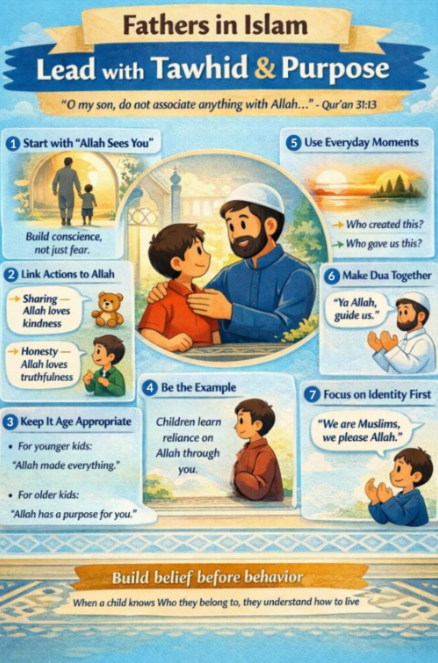
Fathers In Islam
Lead with Tawhid & Purpose
(Inspired by Luqman’s advice: “O my son, do not associate anything with Allah…” — Qur’an 31:13)
1. Start With “Allah Sees You.”
Simple message: “Allah sees what you do, even when no one else does.”
Why it matters: Builds internal conscience, not just fear of punishment.
2. Link Daily Actions to Allah
Say this often: “We do this because Allah loves it.”
Examples:
Sharing → Allah loves kindness
Honesty → Allah loves truthfulness
3. Keep It Age-Appropriate
For younger kids: “Allah made everything.”
For older kids: “Allah has a purpose for you.”
4. Use Everyday Moments
Turn life into lessons: Sunset → “Who created this?” Food → “Who provided this?” Goal:
Make Tawhid alive, not abstract.
read more
5. Be the Example
Ask yourself: “Do my actions reflect tawhid?”
Because: Children see belief before they understand it.
6. Repeat With Warmth
Notice Luqman’s tone: “O my son…”
Tip: Correct with connection, not lectures.
7. Make Dua Together
Short and simple: “Ya Allah, guide us.”
Impact: Children learn reliance on Allah through you.
8. Focus on Identity First
Instead of: “Don’t do that.”
Try: “We are Muslims; we choose what pleases Allah.”
Bottom Line
Build belief before behavior. When a child knows who they belong to, they understand
how to live.
اآلباء في اإلسالم
القيادة بالتوحيد والغاية
)مستوحى من وحّىة uqman :» Luیqm Luq :man َّي ب ا ْك
اهلل ن ِ ب» َ ّيَِ
ِ
ب — سورة هِقرآن الكریا 31:13)
.١ ابدأ بعبارة: «الله الله»
راك«ة رسالة بةطيس یرى :» تفعلي حتم عتفعل لا یرعن أحد.»
ليراك أحد «ھم: امذاي ذاز ًعا يَبنًيا، ًع مد خال الخول مم العقال.
.٢ اربط األفعال اليومية باهلل
قل هذا كثي ًرا: «نحن نحنل فعل ذها نأل للّهھ.ب
ّهثلة:
المشاركة ش ةكر یا لل ايحبّ
للطفق ا قدص یا لل ايحبّ
.٣ ِراع الفروق العمرية
لألطفال الصغار: «الله الل ك لخ شكل.»
شءيطفال الأكبر: «هلل أكب :ر لك هي قصدٌك.ك
.٤ استثمر المواقف اليومية
حّول الحياة إلى دروس: الغروب → «من منق لقا؟» ا؟«عام ع ممن رز»من رزقنا
هذا؟«: جال التوحید ا، حّی ح ًّا، ًما مج ّرًدا. ً
.٥ كن القدوة
اسأل نفسك: «ھل هلكس كسعالي ليتوحید؟»
«؟ن لنأطفال فالن رنویمان مان قب یأنموه.
.٦ ك ّرر بلطف
الحظ أسلوب لقمان: «یا اين ّي…ّ
ّصیحة: ص ّحح :صحّحة الصلةان، نح باللااضرات.
.٧ اد ُع مًعا
دعاء قصير وبسيط: «یا ا اي، هِ،دنا.ن
ا «.ثا: م
یتعل عّلمفال طافلتماد تما الله ال خلانك. ّ
.٨ ر ّكز على الهوية أواًل
بد من: «لا لاعل علا.ذ اًل
ا ّرب: «نحن ّب :»نحن مسلمو ما ُیرضي الله.»
الخالصة
ِناب اإليمان قبل السلوك. عندما یعرف الطفل لمن ینتمي، یفھم كیف یعیش.